Blog | Z Hostel - Part 8
(632) 8856 0851 | (63) 917 889 8531
Share
Z Hostel

Blog

Eats and Sips: Best Restaurants and Coffee Shops in Poblacion, Makati

As the night falls, neon lights and flashy signs begin to excite the ever-busy streets of Burgos and Poblacion. But something else has started to bring more life to this side of Makati: food!!! This area is definitely becoming one of the gastronomic hotspots in the metro bursting with hole-in-the-wall restaurants, quaint coffee shops, lively hostels, and concept cafes. So, where to eat and sip?

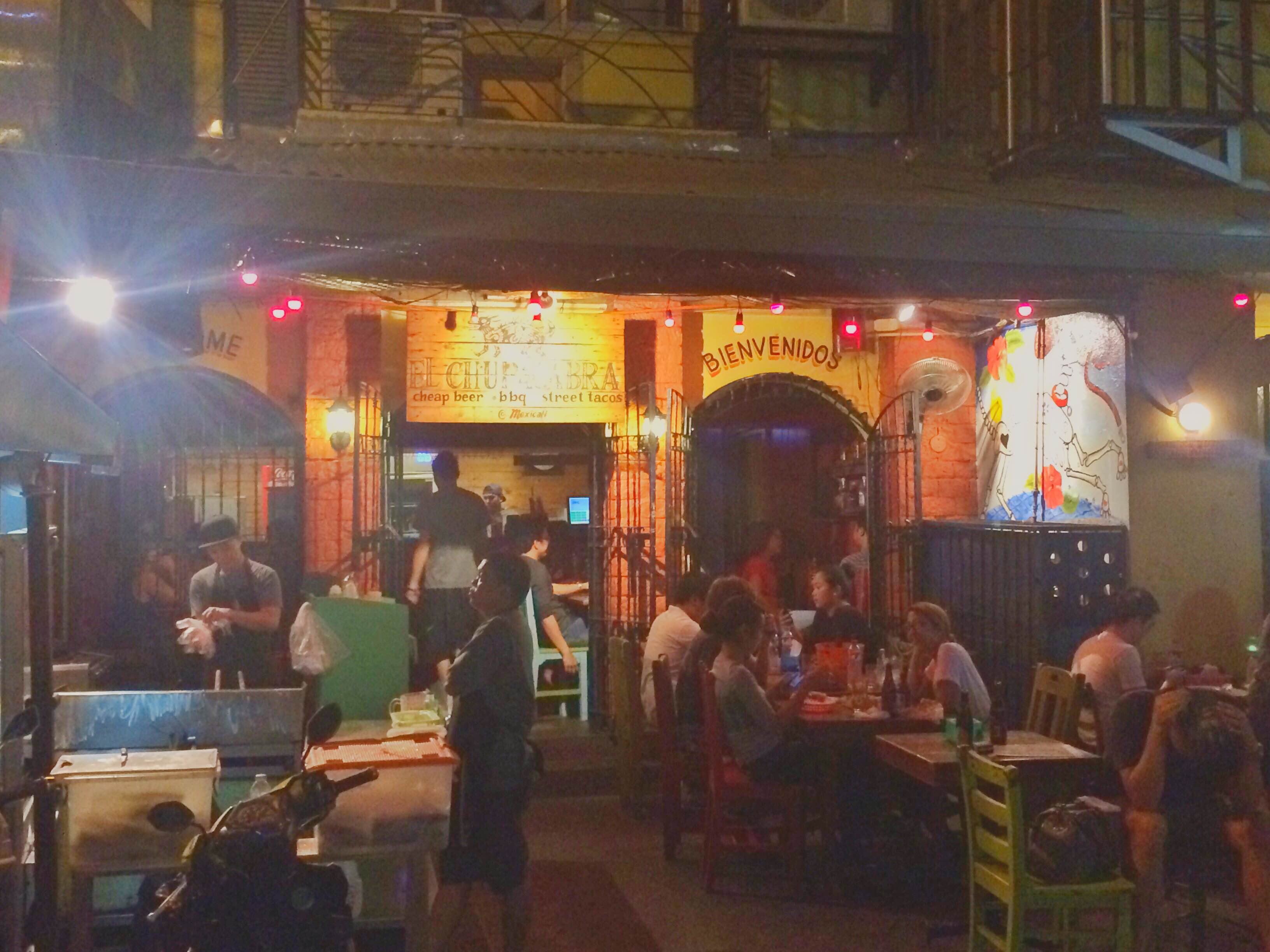
El Chupacabra – Don’t let the monobloc chairs outside get you to thinking it’s an eatery you can miss! This Mexican-inspired hangout place is a humble gastronomic haven best known for its Street Tacos and Grilled Skewers. Bright colors, cheap beers, and a dynamic travel-culture vibe, what more can you ask for?

Tambai – Who ever thought a small sari-sari store could become the hippest Yakitori snackhouse in Makati? Giving a Japanese take on the Filipino word “tambay” which means “to stand by”, you definitely wouldn’t wanna leave once you try their Beef Rib Fingers, Quail Egg wrapped in Bacon, and some good sake.

Señor Pollo – Hot as Bolivia and vibrant as Barcelona, this hermana of El Chupacabra is the home of the famous “Latin Chicken” in Manila! Feast on Roast Chicken w/ Chimichurri, Fried Chicken, and crispy Sisig while tapping your feet to some canciones de Enrique Iglesias and Nicky Jam on loop!

Kite – Taking you to the exotic Mediterranean world, this new kid on the block is getting all the (c)rave for their Beef Kebab Wraps, Tenderloin Chipotle, Ox Brain, and Lamb Biryani.

Z Hostel Recommends: Visit the Ayala Museum

Discover a gold collection in the Philippines in the same city of Z Hostel. View the dioramas, providing the visual display of the history of this country. Get to see the painting of Filipino masters, ceramics from the 9th century, and indigenous textiles, and more.

The Ayala Museum, located near a sprawling expanse of connected malls, has 4 floors of Philippine history, presented in such a way that makes it very interesting and one will get to learn more about the heritage of the Filipino people. The 5th floor is library.

Unlike other countries like Egypt, the Philippines does not have a lot artifacts from ancient history as it is a relatively young country – but at the Ayala Museum, you will learn how the other counties such as China and Spain have greatly influenced this country, making it into a melting pot of different cultures due to its strategic location and having one of the longest coastlines in the world. You’ll also see the history of the Philippines unfold, revealing the highlights from then until the present, in the diorama presentation with a section about maritime history, and the fine gold collection that includes the protective death masks that were used to prevent malignant spirits from entering.

When in the Philippines, discovering more about the history and culture can greatly aid a traveller learn more about the various places they can go to and gain knowledge about the people. Keep in mind that Filipinos have a diverse culture, as this country is made up of 7,107 islands, and since it is a melting pot, many of the people are of mixed origins. To travel this country fully means a long exploration, so it’s a good idea to get an overview by visiting the Ayala Museum.

Address:
Makati Avenue corner De La Rosa Street
Greenbelt Park, Makati City
1224 Philippines

Museum Galleries Operating Hours
Ground to 4th floor is open from Tuesdays until Sundays from 9 am to 6 pm.

Admission Fees

Regular Non-Resident Admission Fees

Basic PhP 350
Full   PhP 425

Non-Resident Student/Senior Citizen Admission Fees

Basic PhP 250
Full   Php 300

Regular Resident (Residents are Filipinos and foreigners with proof of residence in the Philippines)

Basic PhP 150
Full   PhP 225

For more information, visit the Ayala Museum website.

Romblon: A Beauty That Captivates

You have been to Boracay. Twice. You are on your way to Cebu. You are booked for Palawan. But there’s still 7,104 islands more to go. And Romblon should be the next on your list. Let me tell you why.

Composed of three main islands namely Tablas, Romblon, and Sibuyan, the province Romblon is not usually on the must-go lists for travellers in the Philippines. The gateway to the province is Tablas Island where the airport and the main ferry ports are located. Sibuyan Island has been dubbed as the “Galapagos of Asia” for its unique and teeming flora and fauna. As for Romblon Island, little is known about it aside from being the Marble Capital of the Philippines. Little is still known, which only means there is so much more waiting to be explored.

Approaching the port of Romblon Island, the first thing that would catch your attention is a structure reminiscent of a castle — a fortress atop a hill. This piece of history quickly gets you in the mood to explore, discover, and learn about this place which strangely is at the heart of the Philippines yet still remains distant to many. The main town is just right by the bay where the boats dock. And although dotted by small specialty shops, local eateries, and a mini funfair where locals hang out and place their bets on the “pula-puti” game board, the town still feels sleepy and the vibe speaks of simplicity.

The town of Romblon is best explored using a motorbike which you can rent for Php 500 for an entire day. Winding roads by the coast serve as your viewing deck for an unlimited view of a calm sea dotted by islets and the orange sun, little by little dipping and hinding behind the mountain range as it begins to set. It has got to be one of the sexiest sillhouettes you will ever see.

Although Romblon is not too far away from the famous and celebrated Boracay Island, it has still kept most of its hidden gems from the crowd. Getting to one of its spectacular spots, Bonbon Beach, is still shady as shady can get. Riding a tricycle, you will be dropped off by the main road in the middle of nowhere and will just be told to enter through a mini-forest. A narrow path among old palm trees and dried shrubs leads you to the beach and the first glance will blow you away. Remember the moment in the movie The Beach where Leonardo DiCaprio saw the magical cove for the first time? It is that kind of moment. The beach was glistening white, the palm trees were standing tall, and the white sand bar is peacefully resting in the middle of azure waters. And the best part? No other person around. The beach is all yours.

Romblon’s waters is also teeming with abundant marine life. An hour away from the main town is Agpanabat Reef. Just a few meters away from the shore, huge corals will start greeting you. A few more and you find yourself in the middle coral structures formed into cave-like passages with vibrant marine creatures of all sorts: colourful reef fishes, scores of blue starfish, and soft anemones. On a lucky day, a few green sea turtles will be your swimming buddies.

There are already several small resorts popping up along Romblon’s coastline. Some homes welcome guests as well. Spend the night out on the beach for a hearty dinner of grilled squid, fish, and vegetables: fresh seafood and meat are very affordable in Romblon. Dip your toes in its quiet waters and you’ll be guaranteed to see glowing planktons. It is honestly such a magical and inspiring sight.

It comes as a surprise that Romblon Island is not much-talked about by many travellers yet. But once you get there, a part of you would want the place to remain that way: untouched, kept, and hidden. And only those who take time to explore its corners and secrets will be rewarded to see its raw beauty. The kind of beauty that makes you giggle, that you cannot stop talking about, and that truly captivates you.

It’s More Festivals in the Philippines!

The world’s best islands. The most hospitable people in the world. A volcano that is a perfect cone. The sweetest mangoes. And a festival for every day of the year? If you find yourself in the Philippines right now, consider yourself lucky. If not, better get those tickets booked and your dancing shoes ready. Because in this side of the world, everyday is a party!

It’s no doubt most people, locals and travelers alike, agree to the country’s most recent tourism campaign “It’s More Fun in the Philippines” as it truly captures one of the best assets this country has to offer: our infectious love of celebration and merrymaking. Don’t be surprised if one day, while riding the bus in a little town in Cebu or just walking down the city streets of Manila, you will be stopped because a parade of dancing children in colorful costumes is passing by. But don’t fret, it is one of the best cultural experiences you will ever have being in the Philippines.

Most festivals, or “fiestas” as they are called locally, are highly religious and cultural in nature, honoring the patron saint of a city or town or celebrating a ritual or tradition kept alive for generations. But the rest can be as diverse and bizarre as it can get. Talk about a rice festival, flower festival, a hot air balloon festival. Then you have a mango festival, milkfish festival, and even a parade of lechon (yes, the crispy and juicy roasted pig!) completely dressed in different characters!

A year may not be enough to experience all these grand celebrations of culture, religion, and abundance but you can definitely plan out trips to catch these three major festivals in the country:

Ati-Atihan Festival

3rd weekend of January | Kalibo, Aklan


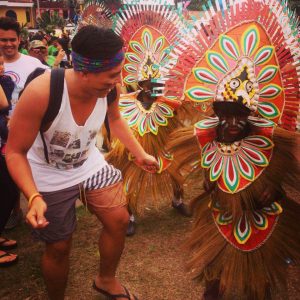
Hailed as the “Mother of all Festivals” in the Philippines, Ati-atihan has become more than just an attraction. Painted faces, vibrant indigenous costumes, and loud drumbeats fill the streets of Kalibo as the locals honor Sr. Sto Niño. Locals and tourists are encouraged to paint their faces and dance with the performers rather than just staying in the side. The heavy dancing starts from day until night, with a lot of eating and drinking in between. Ready to Mardi Gras, Filipino style?

Sinulog Festival

3rd weekend of January | Cebu City


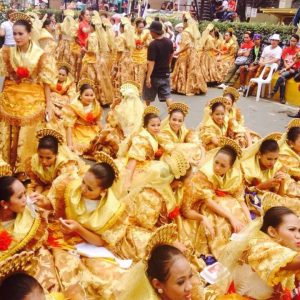
Perhaps the most celebrated and most attended of all festivals, Sinulog has been drawing up millions of people each year. It is a religious and cultural festival in Cebu honoring Sr. Sto Niño with the street dance ritual performance as the main highlight. There will be a lot of “Pit Señor” shouting all throughout the weekend and expect to come home with a shirt splattered with paint and a body soaked beer. Yes, it does become a wild fiesta over the weekend!

MassKara Festival
Weekend of Oct 19 | Bacolod City


What better way to experience a festival but to be all smiles right? Then MassKara Festival hits it right on the spot. Rightfully celebrated in the country’s “City of Smiles”, the festival is a weekend bonanza of street dancing by performers wearing colorful smiling masks. MassKara comes from the words “mass” meaning “crowd” and “kara” meaning “face”. So if you find yourself in the streets of Bacolod on those dates, you are in for an overload of happiness and merrymaking only this country can offer!

So the question is, are you ready to partayyy?

El Nido, Palawan: Paradise Fifty Times Over

If you’ve been traveling, still on your way to start your journey, or just plainly a huge Leonardo DiCaprio fan, there’s an 80% chance you’ve already seen “The Beach” at some point in your life. Now try to remember the scenes: Unbelievably crystal-clear waters, immaculate powder white sand, lush limestone cliffs. Just you, the beach, and pure bliss. Now imagine all those twenty times over. Or maybe fifty times. Welcome to El Nido, Palawan.

The real “The Beach”

It’s no surprise some local accounts say that Alex Garland, the author of the novel ‘The Beach” to which the movie was based upon, was actually staying in El Nido when he wrote the book but shot the movie in Thailand for commercial purposes. I guess it’s blessing in disguise as El Nido still remains to be untouched and unspoiled, truly a paradise before your very eyes.

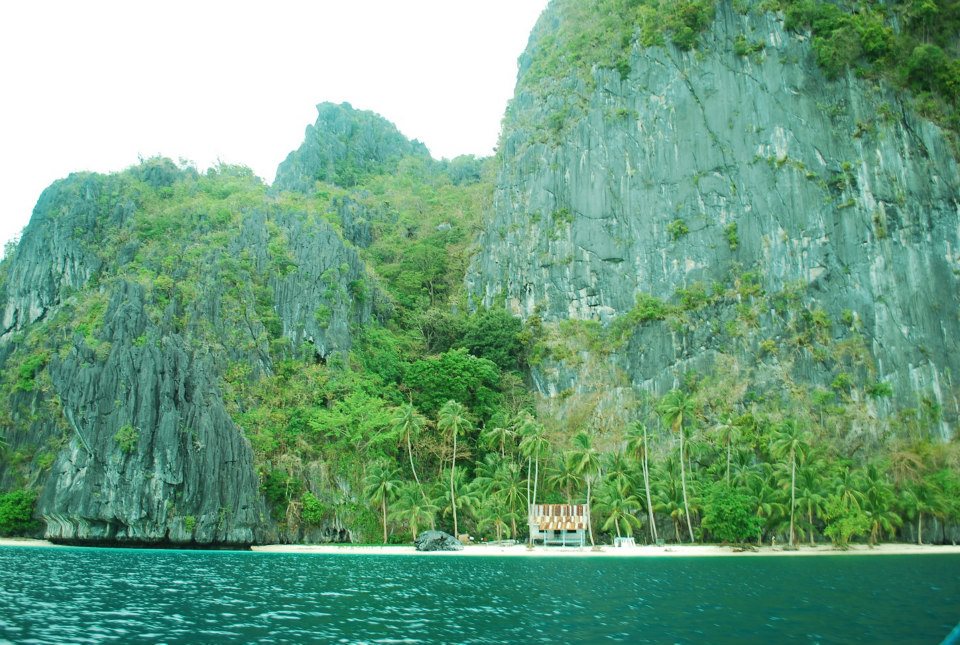
Just one of El Nido’s spectacular islands

Magical, enchanting, too good to be true. You’ll probably run out of words to describe El Nido once you start hopping on a small boat on to spectacular islets, gorgeous coves, hidden beaches, and sparkling turquoise waters and thousands of colorful fish in between. The island tour is the main attraction in El Nido. There are 4 tours namely A, B, C, and D and each would visit up to 4-5 different places. Each tour would cost from Php1000-1200 and can be easily booked through the several operators around town. If you’re pressed with time, take tour A and C.

Nacpan-Calitang Twin Beach

Because there’s no such thing as too much Vitamin Sea, spend an entire day in a secluded beach about one hour away from the main town by motorbike. Nacpan-Calitang Twin Beach is paradise within paradise, if there’s such a thing. As the name suggests, it is a gorgeous two-faced beach: one is a long stretch of palm-fringed white sand while the other one is a rockier version. It is quiet, dreamy, and almost out of this world. Climb up the cliff on the other end and you will see a view of the twin beaches that will take your breath away and split your hearts open.

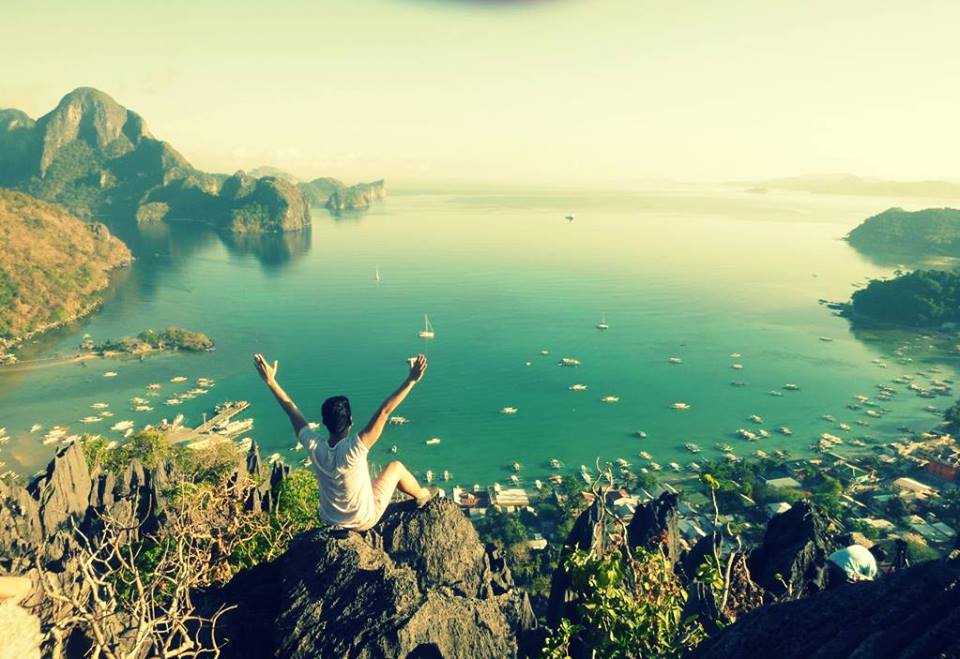
On top of the world: The glorious view of Bacuit Bay at Taraw Cliff

Back in the main town, you can also climb up Taraw Cliff if you are feeling a little adventurous. Actually no, it’s a “go hard or go home” kind of decision to make. Only steep and sharp limestone karsts and no flat trails from bottom up so you better be ready for a heart-stopping climb. But once you get to the top, you would thank the inner Lara Croft in you and just be at awe with the glorious view of the Bacuit Archipelago.

There are far more beautiful things left to be said about El Nido. But i’ll leave it all up to you to see, discover, and explore. Now book that ticket and enjoy paradise — fifty times over!

Getting There

From Manila, take a plane to Puerto Princesa. From PP, you can take either a van or bus to El Nido. There are airconditioned vans waiting right outside the airport for Php600-700 one way. Buses are cheaper at Php400-500 pesos but you have to go via tricycle to San Jose Bus Terminal from the airport.

If you’re feeling a little luxurious this time, ITI (Island Transvoyager Inc) flies to El Nido from Manila direct ranging from Php5000-6000 one way.

Summersault: Trance ‘Til Dawn at Z

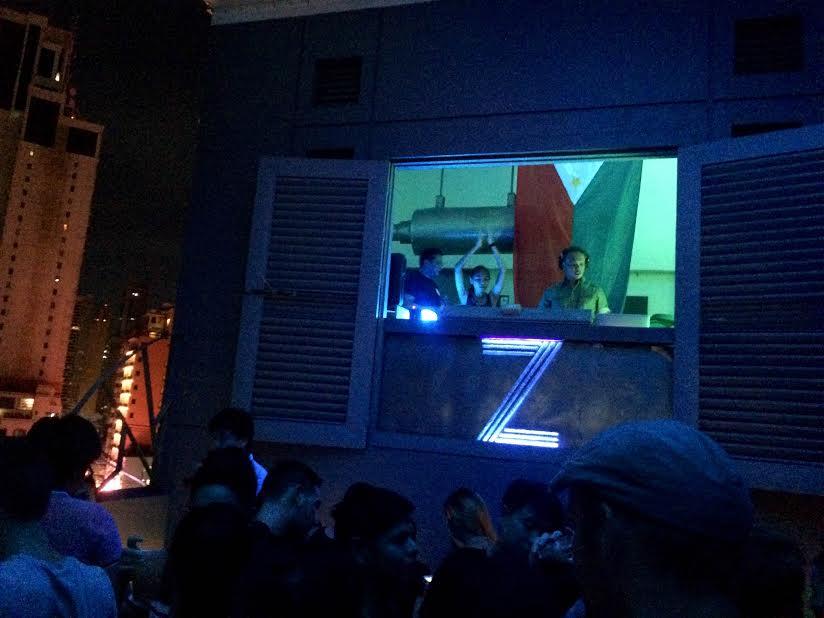
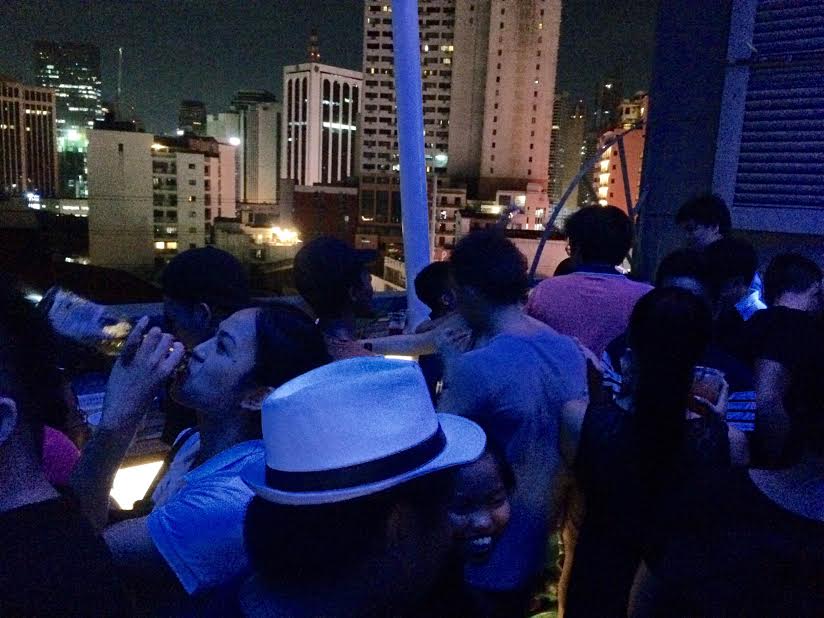
It was an incredibly hot Saturday night but with a glorious view of Makati skyline, ice-cold beers in hand, and unadulterated beats from the best Trance DJs in town, everyone had a great time at the Summersault event last May 24. Summersault is the 3rd episode of Dimension, a series of the trance nights hosted by the largest local Trance group in the Philippines, Trance ‘til Dawn, at the Z Roofdeck.

Z hostel guests as well as walk-in visitors were treated to a night of good trance music, which actually sounded fresh and current. There’s always this association with Trance music as something dark and deep but Summersault gave a new spin to it. DJ Jedd Rommel of the duo Boys Can Trance opened the night and the duo’s other half Marco Lozano played after him. More and more guests came in and the vibe just got better. German DJ Alex Neumann closed the night with tracks that had people stay up on their feet.

Dimension is a brainchild of Cheka Laoner, a Trance DJ herself, and member of Trance ‘til Dawn. She put up the event to spread the good news about the genre. “Trance is usually labeled as underground. They think it’s only intense and energetic. So not a lot of Filipinos appreciate it yet,” she shares. Looking at how she can turn around this mindset and educate more people that Trance can be chill, calm, and relevant, too, Dimension was born. She thought Z Hostel would be one perfect venue to stage Dimension as the hostel has been making waves and gaining really positive reviews, especially the music scene in the roofdeck.

The first Dimension event was a success and paved the way for it to become a regular event at Z Hostel, held every 3rd Saturday of every 2 months at the roofdeck.

“It is one of the most beautiful genres and it needs to be heard,” Cheka added with much passion burning in her eyes. Well, we hear ya! And we can’t wait to be taken to different worlds and dimension again!

Stay tuned for the next Trance ‘til Dawn event at Z! Check www.zhostel.com

Holy Week in the Philippines

The Lenten season is observed by most Filipinos as this is a predominantly Catholic country. It starts off with Ash Wednesday and people flock to church to have a priest who uses ashes to place a cross in the middle of their forehead.

Holy Week should ideally be observed the whole week, as it was in the olden days but nowadays, the days the devotees may do their acts of worship are Thursday to Sunday.

Maundy Thursday is the day where a good Catholic must visit 7 churches. On Black Friday, one must visit a church. On this day, the cross is covered with a black piece of cloth that signifies how Jesus died. The cloth remains on the cross until Easter Sunday which is the celebration of the resurrection of Jesus.

It is typical of the Filipino family to take advantage of the long break to spend time together going out of town to places like the beach as it is summer and the end of the school year.

One thing to note about Black Friday is that travelling is not encouraged and on this day, nearly all forms of transportation and even establishments stop operation. The observance of Black Friday is that of fasting and abstinence. That means that one should eat just a little and not partake of meat. Black Friday is a time for mourning in remembrance of how Jesus died on the cross.

Tagaytay: A Tale of Trust Betrayed

Tagaytay provides the best view of the world’s smallest volcano. This volcano has the crater in the middle of the lake of the Taal. Local and foreign visitors visit Tagaytay which about 55 kilometers away from Manila, to stare in awe at Taal volcano, to enjoy the cool crisp air, and the hospitality of the people of Tagaytay.

How a stranger would come to Tagaytay to stare at its beauty is probably one of the most unknown tales about Tagaytay and how the name was derived. Most of the names of the places in the Philippines were given because of what is distinct to the area, such as the small town of Balisong in Taal, which makes the unique knife that has a split handle that closes to cover the blade, and this can be opened to expose the blade with just a flick of the wrist.

The tale of how Tagaytay got it’s name is very interesting. Tagaytay can be broken down into two Filipino words which are “taga” meaning to hack with a sharp instrument and also is the name of a kind of large knife for use in the fields, and “Itay” which means father. Here’s the tale:

A young and beautiful woman who belonged to a wealthy Tagaytay family, met a good-looking, charming man at the ridge who was not from this place. He courted her and often visited her. One day, she had fallen in love with him, believing his flowery words – she had allowed him to kiss her.

After she was kissed, being pure, she asked him when he plans to make her his wife. The man scoffed and said that he had no plans to marry her. In her anger, she started running towards her home, shouting the words, “Itay, taga!” repeatedly over and over so that her father could hear her.

The father did come out with his large knife, and so did some other people. The man saw what was happening, started running away to save his life from the angry mob. As they chased him, the young woman was crying in despair because she was considered as disgraced, and continued to scream, “Taga, Itay, taga…”

The man was quick and was able to escape by running down the hill towards the lake. There were rocks that he had to clamber as that was the direction that he was cornered to run to. The people of the place stopped chasing him after he climbed the rocks, and just stood there. The reason why they no longer followed the man is that the rocky area was very dangerous, and he will not survive his escape and fall off the ridge.

Even during these modern times, there are still many Filipina women who remain chaste and pure until marriage, and the Filipino father is typically protective, and does have a strong influence on who the daughter will marry.

Note: Tagaytay’s Department of Tourism has a strict “Honesty Policy” for all establishments, facilities, and for transportation operators. This city is also one of the cleanest in the Philippines and the local government has imposed a number of ordinances to make sure that the air quality is kept as pure as possible.

One of the Best Filipino Food: Lechon

Image Credits: Manong’s Lechon Cebu

Lechon is a cooking term. The Filipino way of naming food is that the dish is to be identified by the cooking term and then followed by a noun, which is the main ingredient.

The process of cooking meat and poultry by placing it on a spit over hot coals or other forms of heat such as that of the heating elements in an oven, and continuously turning meat or poultry until it is cooked. Before cooking, the main ingredient may be marinated, rubbed, and may have an herb-based stuffing. Fish and other seafood are grilled but these are not lechoned.

The most popular kind of lechon is that of lechon baboy (roasted pig). This is presented as a whole pig with golden brown crispy skin. The dipping sauce is a gravy made from pork liver. Lechon baboy is the main dish of most festivities in the Philippines. There are different sizes and it may be bought as whole or in kilos.

There is also lechon de leche (roasted suckling pig) and lechon baka (roasted calf). The whole calf undergoes the same cooking process.

The most common main ingredient that become lechoned is chicken. There are lechon manok (roasted chicken) stalls in many areas of the main city and in the provinces. These are bought whole. Often, there are roasted slabs of pork offered by the same stalls but these are called “liempo” to identify the pork cut and are not called lechon, as the cooking term only applies to the meat or poultry being cooked as a whole.

Popular Bottled Alcoholic Drinks in the Philippines

All of these popular alcoholic drinks are best when drank cold or served on ice.

San Miguel Pale Pilsen – This is the “King of Beers” in the Philippines. This beer contains 5 percent alcohol. It is rather bitter, that pours to create a thick foam. This is available in bottles, canned, and as draft beer. The price of this beer ranges from 40 pesos to 175 pesos for a 330 ml can or bottle.

San Miguel Light – This beer contains 5% alcohol. The brew taste nearly the same as that of San Miguel Pale Pilsen but contains less calories. The calorie intake is 130 per 330 ml bottle or can. The price ranges from 40 to 175 pesos for a 330 ml can or bottle.

Red Horse Beer – This beer packs a stronger punch as it contains 6.8 percent alcohol. It is bitter topped with a light sweetness. The price of this beer ranges from 45 to 175 for a 330 ml can or bottle.

Tanduay Ice – Tanduay is the most popular rhum in the Philippines. The makers of this rhum that is typically drank straight, on ice, or with Coke, has their vodka-based bottle drink which is called Tanduay Ice. This comes in different flavors and contains 5% alcohol. The price ranges from 40 to 175 pesos for a 330 ml bottle.

Smirnoff Mule – This ginger beer has a light lemony taste and contains vodka. This does have a kick as the vodka and beer mix does the trick. It contains 6 percent alcohol. The price ranges from 75 to 200 pesos for a 330 ml bottle.

Brew Kettle – This is a Witbier beer and has a rather sweet, orange taste, with no trace of bitterness. It does have the smoothness and makes one feel full as it contains a trace of oats. It contains 5.3 percent alcohol. The prices ranges from 75 to 175 a 330 ml bottle.

|| book now ||