Blog | Z Hostel - Part 7
(632) 8856 0851 | (63) 917 889 8531
Share
Z Hostel

Blog

Escape the City: Surf and Serenity at Liwliwa, Zambales

Its name may not be as popular as Baler, its swells may not be as frequented as La Union’s. But its gentle waves and sloping shores make it a retreat from the city definitely worth the drive or a bus ride. Step into the sleepy yet special town of Liwliwa in Zambales: where surf is the heartbeat and serenity is soul.

Just about four hours away from the bustling and busy Manila, Liwliwa has become an alternative to the more famous surfing spots up north. From the main road of San Felipe, Zambales, a narrow crossing with a small town marker and a hostel’s name stand (they’re not too noticeable so be mindful) leads one to the quiet town of Liwliwa. What instantly captures the attention are the pine trees dotting the road sides, an interesting twist to the tropics.
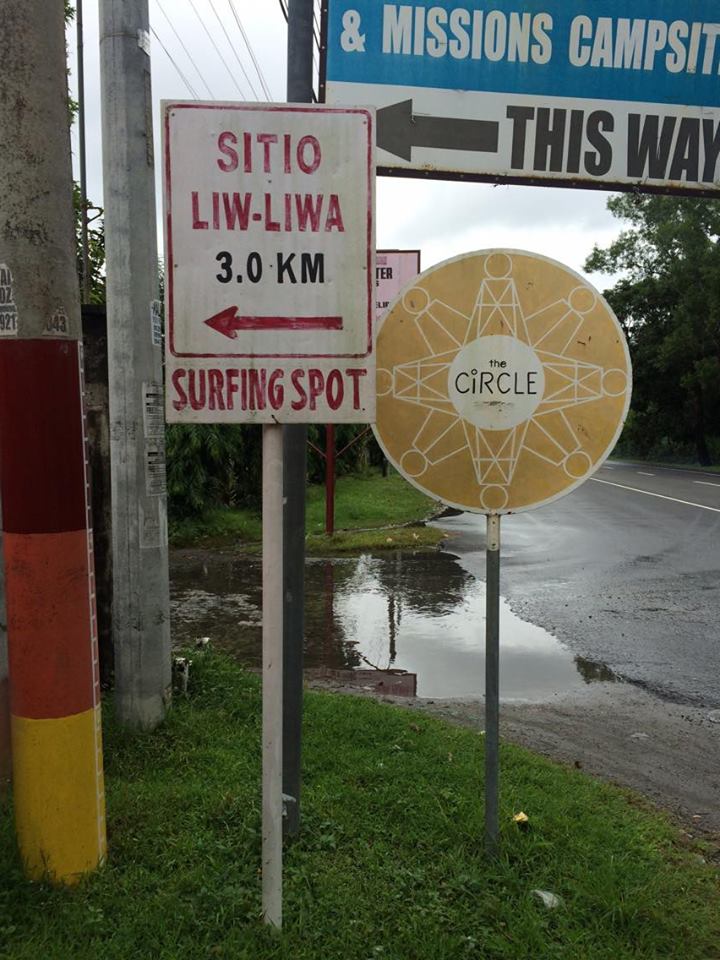
Structures with thatched roofs, surfing boards, and colorful artwork officially welcome one to Liwliwa. These hostels and inns perfectly fit into the scene: they are homey, rustic, and soulful. The accomodation is simple but it’s actually everything the place exudes and what a weary soul longs for: away from the hustle and bustle, close to nature, and back to basic.

A quick walk through a smaller alley still lined up with pine trees takes one to the beach. Finally, clear blue sky, roaring seas, and fresh air! The beach is wide, unspoilt, and empty, save for a few huts made out of drift wood and coconut leaves.

Honestly, it cant rival the shores of Boracay, Cebu, or Palawan but there is something about the place that draws you in instantly, that makes you feel home and at peace. It is chill as chill can get.

Many of the travelers prefer to just laze and lounge around the shores and take the relaxing atmosphere in but some take the call of rush and head on to surfing Liwliwa’s waves. Almost all hostels and restaurants offer surf lessons with locals as instructors and they very much welcome beginners. Others go skimboarding when the waves are gone as the day begins to end. With some beers in hand, Xavier Rudd’s songs on loop, and the company of friends (and even with the strangers there you’ll eventually be friends with), the skies in Liwliwa turns into a beautiful canvass of violet, yellow, and red. Breathtaking.

If one could only point to one thing that makes Liwliwa feel home, it must be the people. From the hostel staff to the owners and servers at the local eateries, they welcome and embrace you with such warmth and familiarity, even if it’s just your first time. They remember your face and greets you the next morning as you walk past their stores.

The vibe upon entering Liwliwa is good but in just a few hours time especially after catching some waves, a down time at the beach, and some good conversation with the locals, it becomes nothing short of great.

How to Get There

  • Ride a bus from Cubao or Pasay to Iba, Zambales and tell the driver to drop you off at San Felipe.
  • From the bus stop, look for tricycles and tell the driver to take you to Sitio Liwliwa.

Where to Stay

There are a number of hostels and inns in Liwliwa but highly recommended is The Circle Hostel.
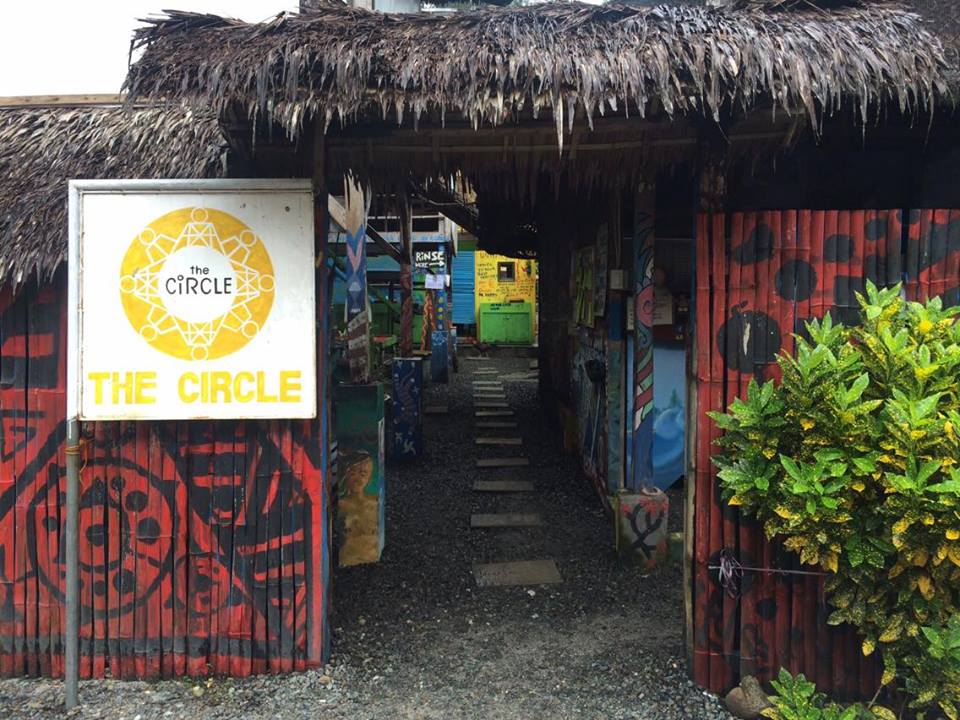
It’s known for its quirky design of quotes, art, and other colorful bits and pieces plastered and written in almost every corner of their wooden sheds. The accomodation are very basic and an interesting choice would be to stay in a hammock.

The staff are uber-friendly and accomodating. The freshly brewed coffee in the morning is amazing, too!

Where to Eat

Mommy Phoebe’s offers delicious, homecooked meals and refreshing fruit shakes at very affordable prices. But the highlight would be the staff who are like instant aunts taking care of their little nieces and nephews.

Ate Fely’s offers the best and generous servings of Silogs (rice-viand-egg meals) and cheap, cold beers!
The Book Stop Project: A Must-Visit Pop-Up Library in Manila

Travel is undoubtedly one of the best ways to learn about the world. But one thing has always brought us to worlds unknown and interesting characters without having to leave: books.

In this day and age of eBooks and Kindle, it may seem like they are already out of place. But nothing still beats that earthy smell when leafing through a novel. Nothing still beats feeling like opening doors and entering dimensions with your own fingers. Thanks to the book-loving people behind WTA Architecture and Design Studio, a mobile pop-up library has been making rounds in some of Manila’s most picturesque and historic locations.

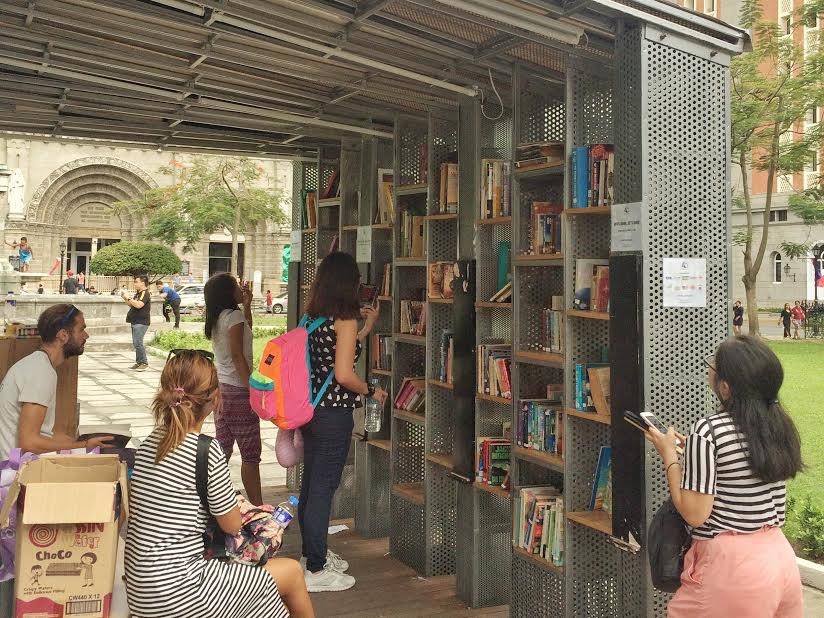
The Book Stop Project is definitely becoming a hot spot for the bookworms and the plain curious ones. In the middle of a park, in front of a beautiful cathedral, is a steel shed that houses a collection of pre-loved books and some wooden benches for a delightful reading time and interaction with fellow readers. More than a bit-sized library, it is a portal of learning where people from all walks of life can enter, pick up and read a book, and exchange ideas with each other.

And the best part? Knowledge-sharing built upon honesty. This mobile library encourages exchange of books, with not one attendant or registration counter around. You get one, you leave one. If you don’t have anything to leave, just make sure to return what you borrowed. And if you have more books to share, much better. The idea is to reinvigorate the public’s interest in books, in libraries, in sharing and interaction in a contemporary setting. As their motto espouses, The Book Stop Project aims at “sharing ideas one book at a time.”

The Book Stop Project made its first stop in Ayala Triangle Gardens, a lush green space in the middle of the urban jungle that is Makati City. It then traveled to Plaza Roma, Intramuros, just right in front of the iconic Manila Cathedral. It is now currently in front of another architectural gem, the San Sebastian Basilica, being the only prefabricated steel church in the world.

A visit to The Book Stop Project is definitely a win-win situation. You get to read a book and share ideas with a breathtaking basilica as a backdrop. So while you are in Manila, definitely make this one of your city tour stops!

Visit The Book Stop PH for exact location and latest announcements of The Book Stop Project.

Buscalan, Kalinga: Where the Traditional Tattoo Lives On

Most travelers head up north of Manila to cool down in summer capital Baguio or La Union to catch some good waves or to Banaue to witness the majestic rice terraces. But further up the province of Kalinga and into the depths of the earth lies an isolated and serene village of Buscalan where the traditional tattoo art lives on.

Just as how special the tattoo tradition in Buscalan is, the journey going there is nothing short of epic. A 15-hour travel by bus, van, and jeepney takes one from Manila to Bontoc to Buscalan. The road from Bontoc to Buscalan is one of the most scenic any person can ever imagine: lush and endless mountain ranges, the raging waters of Chico River, and perfectly carved rice terraces. But it definitely is not for the faint-hearted. While the views can be best seen and experienced by riding on top of the jeepney, the sight of deep ravines just a few inches away from the jeepney’s tires will make one hold on for his dear life.

From the drop-off point, the 1-hour trek to the village begins. With the locals as guides, one walks through a narrow path along rice paddies and across mountains. The steps are steep and slippery and the trek seems endless. Then a gorgeous amphitheater of rice terraces dotted with tin roofs begin to unfold. Welcome to Buscalan.

The locals open up their homes for travelers to stay. For P250 a night, one gets a mattress and unlimited rice and coffee. Kalinga coffee is delicious. Their brew is not too bitter, not too sweet. Just the perfect blend to sip in the middle of fog-covered mountains. The locals are friendly, warm, and simple. They make you feel like you are a part of them. They also greatly appreciate some gifts (it is advised not to bring candies for the kids anymore, school supplies and dental kits might be more helpful). And as they share their interesting stories, one can’t help but notice the beautiful and intricate artworks in their bodies: the traditional tattoos.

The Bubut tribes in Buscalan are warriors known for their headhunting tradition from decades ago. Once a man takes down an enemy and brings back the head to the village, he earns a tattoo. For the women, the heavily decorated your body is, the more beautiful you are. The designs also signify different meanings: centipede for protection, pythons for strength, and an eagle for courage, among others.

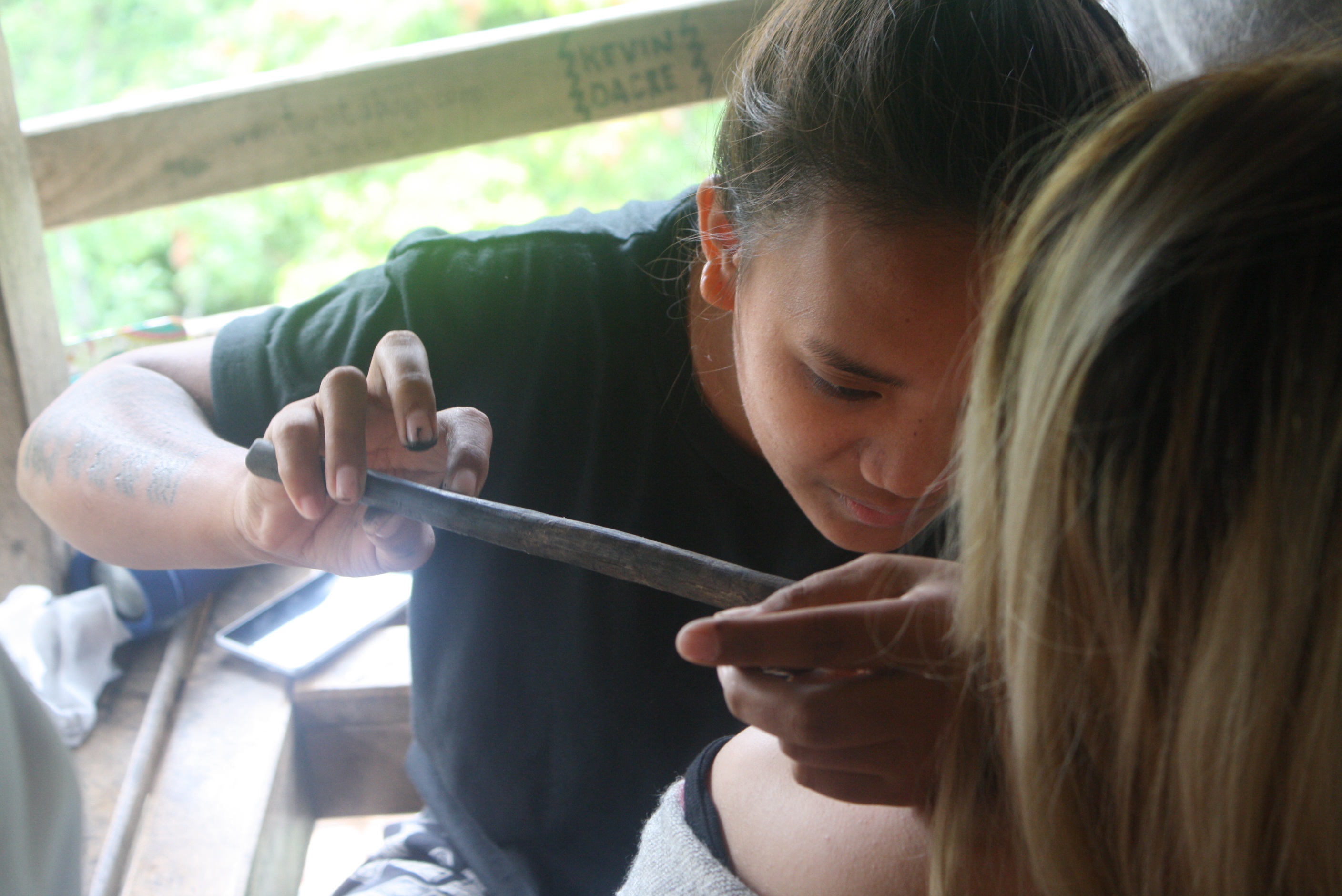
The town of Buscalan has become famous over the last years as people want to have a piece of this tradition most notably from the 98-year old Apo Whang-od, regarded as the oldest and last “mambabatok” from the tribe. But the tradition lives on as the new generation members Grace and Eliang, two young and beautiful ladies, have started to do the tattoos to visitors as well.

Using a bamboo stick with a sharp calamansi at the end and pine loot as ink, the painful yet rewarding tattoo art begins. The women’s skillful hands bring the intricate designs to life as the inked thorn pricks the skin. Blood rushes out and the sting lasts. One is marked forever.

Deep into the mountain ranges lies a village where an important tradition lives on. The journey to Buscalan is not easy. The lines to get a tattoo from Whang-od and her granddaughters are long. But as the locals have said it, “if you cannot wait, you don’t deserve it.” But if you can, the epic journey awaits.

How to get there

  1. Take a bus from Sampaloc, Manila (Ohayami Bus) to Banaue. It leaves every night at 9:00 in the evening.
  2. From Banaue, ride a van to Bontoc.
  3. From Bontoc, ride a jeepney to Buscalan drop-off.

Reminders

  1. It is better to travel by group to split the guide fee of P1,000/day for 4 people. Guides are usually on stand-by at the drop-off point.
  2. Bring food to cook and share as the homestay fee of P250 only includes coffee and rice.

Crying Tiger Street Kitchen: A Thai Delight in Makati

Adding to the multi-cultural vibe the streets of Poblacion in Makati is getting known for is another unpretentious and simple hole-in-the-wall restaurant, The Crying Tiger Street Kitchen. While a number of restos in the area serve Mexican and Western flavors, this one cooks up our delicious Thai favorites.

Although located along Guanzon Street in Makati and just across A-Venue Mall, it takes a good eye for hip design to spot The Crying Tiger. It just blends right in the neighborhood. It’s not fancy but it’s nowhere near shabby as well. Cement walls are accentuated by a pop of bright-colored paint, a variety of lamps give warmth to the place, and the simple wooden tables and colorful steel chairs make the place so inviting without any intimidation. The place definitely reminds you of the small, charming open-type cafes and restaurants in the street corners of Chiang Mai.

It isn’t surprising to know the same people behind the well-loved restaurants in the same area namely El Chupacabra and Señor Pollo are also the masterminds of this Thai delight. It has the same homey but cool feel to it, the same kind of mystery that draws you in. The crowd is also a good mix of foreign backpackers and neighborhood locals and young professionals.

While it took awhile for the food to come, it did not disappoint in taste. The classic favorite Pad Thai (P225) glistened and looked very generous in serving. It also tasted as good as it looked, every strand of the glass noodles and the mung bean sprouts were packed with just the right sweet and salty flavors. Pad See Ew (P225), while it looked rather pale and unappetizing, was also a winner in taste. The Char Siu Pork Rice (P225) is also a treat to the tastebuds, especially with its spicy kick. Down some Thai Iced Tea and you’re solved! Overall, they could do much better in presentation though.

If you’re looking to satisfy your Thai food cravings or just want to take a break from the tacos and barbecues then make sure to give The Crying Tiger a stop when in Makati. With a few improvements in place, a dinner out at The Crying Tiger will definitely be a tears-of-joy kind of experience.

The Smokeyard: American Barbecue in Poblacion, Makati

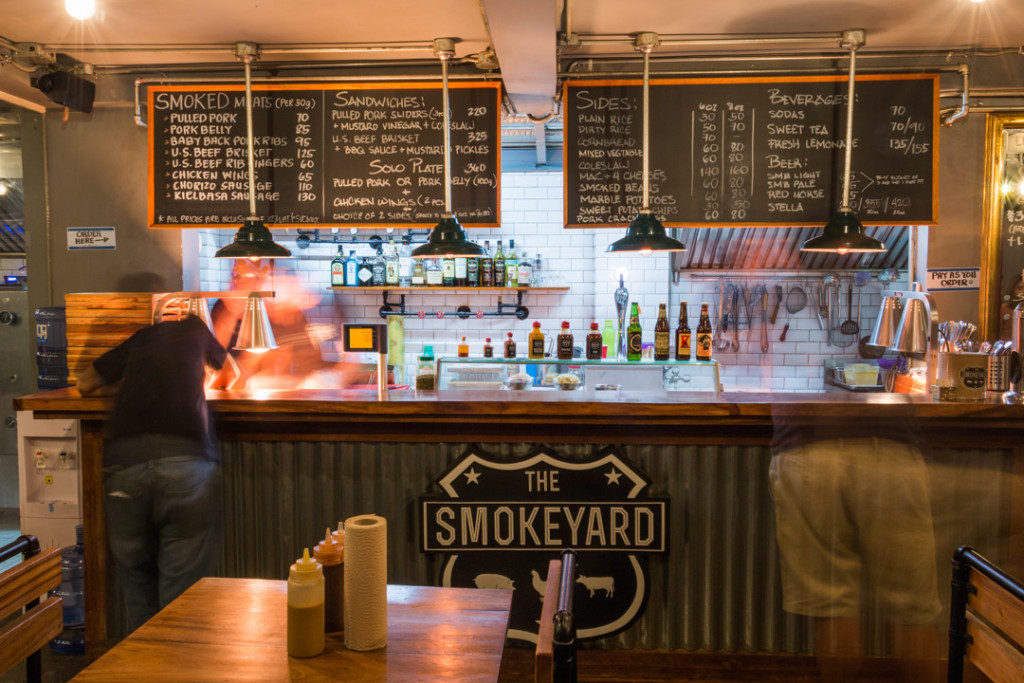
The quirky streets of Poblacion in Makati, now a gastronomic hotspot, has just become hotter with the new addition on the block: The Smokeyard. Sharing the same space in the newly opened Mekanor Building with new restaurants Wild Poppy, Alamat PH, and Bucky’s, this all-American barbecue joint is a meat-lover’s paradise.

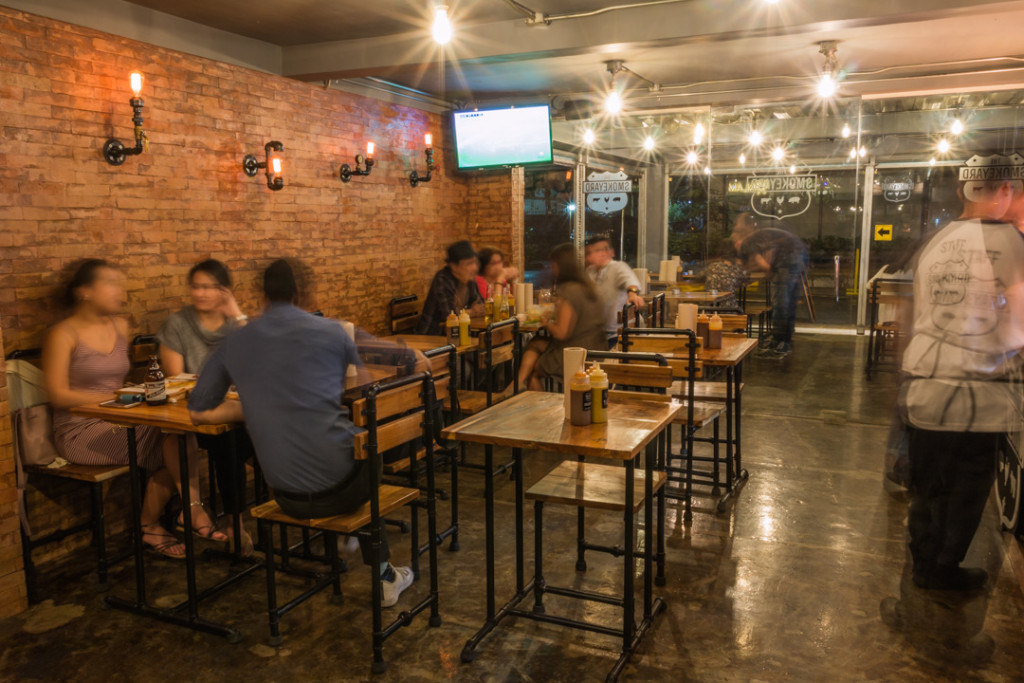
While you won’t literally see smoke coming out by the restaurant, the earthy and woody smell instantly captures and draws you in. Walking inside takes you to a visual mix of wooden and industrial from beautiful wooden tables and interesting warm lamps from steel pipes.

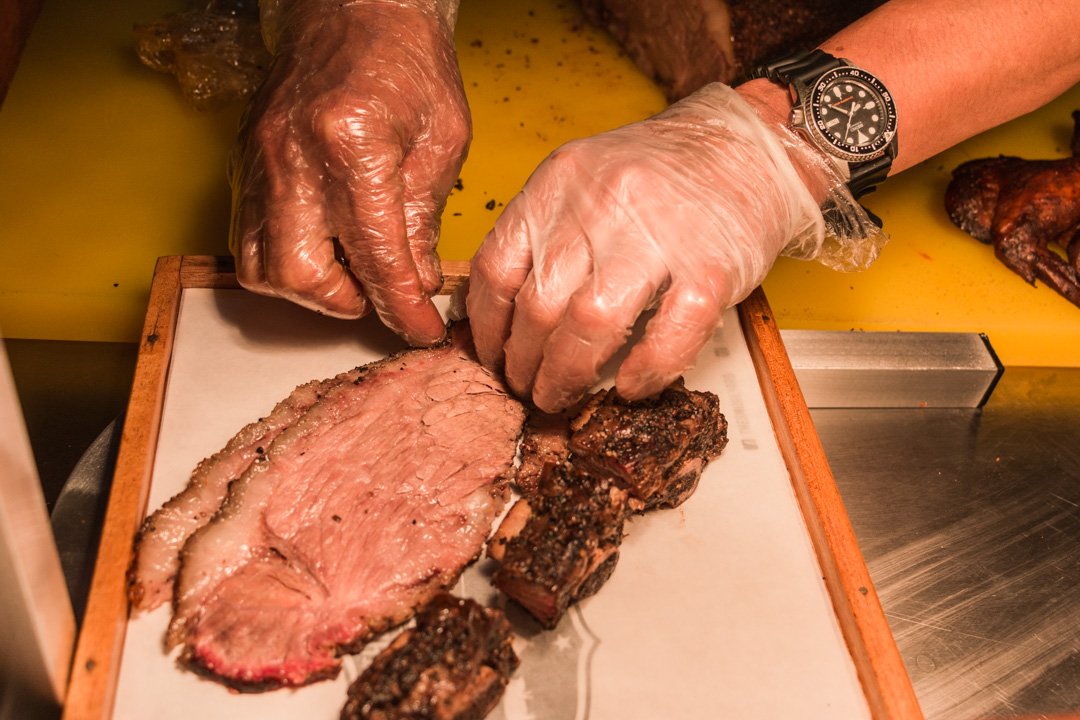
The main attraction is of course the food: smoked meats and a wide array of sides to choose from. The place is perfect for hungry tummies or those who simply want a mouthful of sumptuous meats rubbed and smoked to perfection.The stars include beef brisket and ribs, pulled pork, pork belly, and chicken wings — all go best with their in-house barbecue sauces.

The good thing about Smokeyard is that you can order these meats in small portions (50 grams) so you could get to try a little bit of many things.

Complementing the rich taste of the meats are sides that include coleslaw, mac and cheese, vegetables, smoked beans, and dirty rice (fave!). And rounding up this earthy treat is a glass of house-made and freshly brewed iced tea. But heads up! Don’t get disappointed that the rib meat don’t fall of the bone (when every other restaurant tells you it’s the way it should be), owner and pitmaster Troy Conine explains it’s how it’s supposed to be done: tender yet still intact.

The Solo Plates option is a real treat, too. On a wooden tray you get 100 grams of pork, two chicken wings, and a choice of two sides. An additional portion of meat does not hurt either. The meats noticeably get cold fast so it is best to devour them right away. But it is the slightest of disappointment as the taste makes up for it, and a splash of fire sauce gives the meats a final kick.

Overall, The Smokeyard is definitely worth trying. The staff is friendly and there’s a chance Troy will be the one bussing out your plates, complete with a big smile and a quick remark hoping you enjoyed your food. And you’ll undoubtedly say yes!

All Photos by Claudia Aotriz

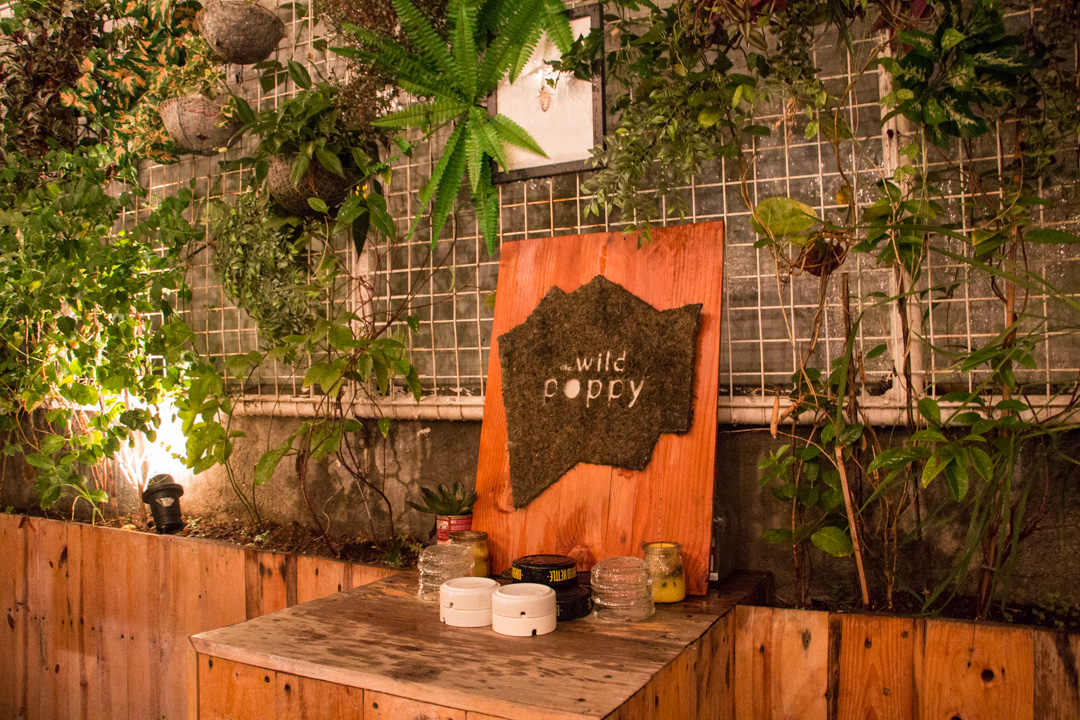
The Wild Poppy: Asian Flavors and Pretty Decors

In the heart of the concrete jungle that is Makati City, only few places seem to cater to that much-needed respite from everything solid and sturdy. But thanks to creative minds who have created that perfect oasis right in the middle of the city. Enter The Wild Poppy in Poblacion, Makati: the newest food haven serving Asian flavors and fresh cocktails on a rooftop urban garden setting.

Every corner is undoubtedly Instagram-worthy: bright yellow and aqua walls with Chevron patterns, wooden tables and chairs with colorful throw pillows, plants and flowers everywhere, and an outdoor rooftop area with the quintessential stringed light bulbs. No need to worry about the rain, too! There’s a transparent overhead tent outside, perfect for that al fresco dinner on a rainy night.

The design itself is already visual feast. The food and drinks take the experience to a whole new level. The Wild Poppy serves Asian-inspired dishes, from Thai to Korean to Indonesian, all with a fresh and exciting twist. The menu is short and simple, the serving size relatively smaller than expected but the flavors are bang-on.

The best starter would have to be the Pokpok Bites, light and crispy bite-size chicken nuggets topped with shallots and laksa leaves. It comes with a special vinegar sauce, too.

The Yoko Tomorokoshi is a sure-fire starter as well, grilled yellow corn topped with kesong puti, scallions, yuzu smoked aioli, onions, and cilantro. Seriously, corn has never looked and tasted this good! The Wild Poppy takes you to the busy streets of Vietnam with their Roll Chi Minh, fresh spring rolls of grilled prawns, pomelo, tomyao, and rocket with a smashing peanut dip on the side.

The buns and rice dishes round up their offerings with flavorful meats and interesting pairings. A personal favorite is the Chicken Ren Damn, their take on chicken rendang. It is sweet, spicy, and packed with a silky coconut flavor that is a treat to the palate!

If you’re in for a classic Asian dish, Hoi Belly! is for you. Braised and pan-seared hoisin-glazed pork belly. Both dishes can be ordered in a mantou bun or with wild rice. The Kim and Reuben can’t be missed, either. It’s an Asian take on an American favorite: smoked corned beef, Kewpie mayo, Swiss cheese, and Kimchi all in one slider bun. It’s a rollercoaster of flavors and textures on the mouth.

Rounding up the burst of tangy Asian flavors are their refreshing drinks. Cucumber Frost to the front: lemon juice with blended fresh cucumber and a spike of gin. Imagine splashing yourself with cold water on a hot summer day. Yes, that’s the feeling you get. Those who want to skip the alcohol must not skip on their Sun Brew, a mix of tea and dalandan juice. And it is honestly like sunshine on a glass you’d actually end up getting two.

The Wild Poppy might not be the most ideal place for the hungriest of tummies but the small, bite-size Asian-inspired dishes definitely do not disappoint in flavor, texture, and aroma. And to eat them in an urban garden on a rooftop in the middle of the city? Best wild idea ever.

The Wild Poppy is located at 2F, Mekanor Building, 5666 Don Pedro Street (next to Z Hostel), Poblacion Makati. Open from Mon-Thurs 5PM-12MN and Fri-Sat 5PM-2AM. IG @thewildpoppy

All Photos by Claudia Aotriz


Z Hostel Stories: How a Game of Uno Started a Friendship

After a few rounds of rum-coke and chit-chat with some friends up in the roofdeck, I decided to do a French exit and get back to my dorm room for some cold air ASAP. It was such a humid night and the place was packed. I was alone in the 8-bed mixed dorm but I could see things in each bed and probably everyone was just away for dinner or drinks.

After a few minutes, two girls and one guy came inside. The usual and seemingly awkward hostel-style hi’s and hello’s were exchanged and there was silence again. I still have to learn how to break a conversation but good thing Sinead and Mandy, both Irish girls, were good at it. We talked about where they’ve been and where they’re going: the usual “5 questions every traveler in a hostel gets asked about.” Then Sinead randomly goes “do you wanna play Uno with us?” I asked, “Where?” “Here up in my bed,” she replied.

As far as I know, this is our 6th minute of knowing each other and I get invited to jump into her bed along with two others for a card game. And as far as I can remember, the last time I played Uno involved a lot of beers. I could not see even a single bottle around. This should be interesting.

And there we were, 2 Filipinos (the other guy, John, and me) and two Irish girls playing Uno up in the upper bunk bed in a dorm room, after 10 minutes of introduction. We clicked so well that we didn’t notice the time. No alcohol involved but we were having a great time. But our roommates started coming in and putting on their eye masks. It was time for bed. Well, for them. So we decided to find another place for more rounds of Uno.

We headed to the Game Room and continued playing. We made up teams: Filipinos vs Irish, Mandy and John vs Sinead and me. But John came up with the idea of putting in money just to give it a little fun, it was one against each other. The game room was filled with laughter, with magic tricks, with poker faces, friendly trash talking, and the amazing smell of Sisig. We couldn’t resist. So at 2 in the morning, we were downing chopped pieces of fat and garlic rice.

Morning came and the four of us were checking out the same day. Me and John off to our usual Manila life while Mandy and Sinead are bound for Hong Kong. But before that, John drove us to Legazpi Sunday Market for brunch and Hillary, a Canadian they met a the hostel the day before, came to join us. After some good food and a lot of Snapchats, we walked to a hipster coffee shop in the neighborhood for a cup of Americano.

Everything happened in less than 24 hours. But it felt like we were friends for a long time. I think this is the best part about staying in a hostel. There seems to be comfort in the things unfamiliar. There can be connection with people uncertain. We may never cross paths again but we did meet at a certain point, we became friends. And these little things are the ones you like to remember, like how a Game of Uno started a friendship.

Z Hostel Sunday Slowdown: Philippine Independence Day

Raise your voices and raise ‘em Philippine flags! In celebration of the Philippines’ 118th Independence Day, our Sunday Slowdown will feature an all OPM (Original Pilipino Music) set from Skylight on June 12, 2016.

From 4:20PM (who knew this time is important to Philippine history! Check out why below!) onwards, start the afternoon with some chill beats and cold beers in the world-renowned Z Hostel Roofdeck.

Skylight is set to rock the floor with the best local tunes around 9 in the evening. The band, born from tiny open mic gigs in Timog, has now grown to a family of 8 musicians covering classic to contemporary songs in their own, unique light.

Expect the best of OPM from this soulful band as well as our in-house music sets. What better way to celebrate the Philippines’ independence than a day and night of good Original Pilipino Music!

***

Just a little bit of history check: The Philippine Independence Day celebrated every June 12 commemorates the day Emilio Aguinaldo, then elected president of the revolutionary government against the Spaniards, declared independence from Spanish colonization at his house in Kawit, Cavite.

At around 4:20 PM, the official Philippine flag was unfurled for the first time as the San Francisco de Malabon band was playing the first Philippine National anthem “Marcha Nacional Filipina” at the same time.

While the Philippines gained independence from Spanish control in 1898, we were handed over to the American government through the Treaty of Paris and would only gain independence from the Americans in July 4, 1946. There is still an on-going debate as to which of the two dates the “real” independence should be celebrated.

Z Travel Hacks: How to Pack for Your Backpacking Trip

Whether it’s your first time to embark on a journey halfway around the world or your third time in the exotic cities of Asia or South America, packing your backpack always seems like a daunting task. That is basically your life at your back, for 3 months or over a year! But we’ve rounded up some tips on how to gear up your travel buddy for the most exciting times on the road!

Meet Halfway

One of the most important things seasoned travelers have learned is to cut down all the things you think you need by half. Lay down everything at once and you are sure to find some repetitive and unnecessary items for your trip you need to leave behind.

Rock and (Compact) Roll!

Probably the most cliché of all packing tips. Because it definitely works! Rolling your clothes saves up so much space and even keeps your clothes from getting wrinkled and creased! But more than just rolling, roll it really tight from the start to get rid of any air taking up space.

Here’s how you do it:

Wash It Out

Fashion is the least thing you’ll think about on the road. It doesn’t mean you go around looking untidy. But no one actually cares if you wear the same things over again! Of course you’ll have to wash it at some point. Also, you can buy cheap stuff along the way if ever you run out of clothes!

No Blank Space, Baby

Every little space inside that bag is as precious as the air we breathe! Make use of it properly and efficiently — you can put small clothing and other items inside your shoes, eyeglass case, and even your Altoids tin! Make sure to remove items in their packaging too as it could store air and take up space.

Microfiber magic

Ditch the bulky and heavy towels and go for the thin, quick-drying, and super-absorbent shower buddy!

Stay Dry 

Definitely place valuable items like books, gadgets, and chargers in reusable, waterproof bags. A waterproof cover is a plus but a good ol’ garbage bag goes a long way, too!

There’s shampoo and sunscreen in Asia, too

Leave out the big shampoo bottles, sunscreen lotions, and contact lens solution. You’ll most likely find all these in one of your stops. Pack the small refillable ones to be more handy and eco-friendly.

Packing for your backpacking trip can get really stressful. But these simple tips and hacks will definitely get you singing, “All my bags are packed, I’m ready to go!”

Top Things To Do in the Philippines During Rainy Season

Sun-bathing in a gorgeous, palm-fringed, white-sand beach on a bright summer afternoon — this is you on your dream vacation in the Philippines. But what if the rainy season already kicks in? Is the Philippines still worth visiting? Why, yes! Flights and accommodations are cheaper during these wet months and with exciting things to do beyond frolicking under the sun, the fun definitely never stops here! Here are things you could do and places to visit in the Philippines during the rainy months of June to November:

Surfing

Catch the best and biggest waves during the rainy monsoon or “habagat” season as it is called in surfing hotspots like Siargao Island, Baler, Dahican Beach in Davao, and Ilocos Norte. With extreme caution and care doing the sport, you’ll be guaranteed a great time surfing in the Philippines during these months.

Water Sports and Activities

The rush of water during the rainy season definitely brings more excitement to sea and river activities in the Philippines. Head to Cagayan De Oro City for a thrilling white-water rafting and river trekking adventure! Hop on a bus to the next town of Iligan City, dubbed as the “City of Majestic Waterfalls”, and enjoy a leisurely hike up to hidden waterfalls and cold spring resorts.

Beach

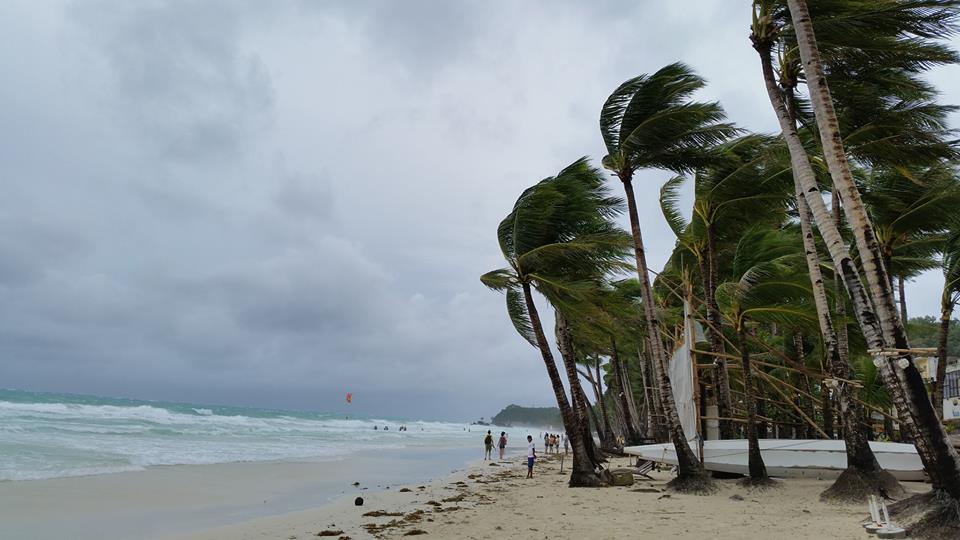
There is a certain charm to beaches when it is raining. While Boracay is the ultimate summer destination, it is also beautiful and much dramatic during the habagat season. The water activities are transferred to the “back beach” of Bulabog so there are fewer people basking on the main beach. The hotels and inns are also certainly cheaper. You can surely save money (and yourself from those painful sunburns, too)!

Shopping

Avoid the cold raindrops and just shop ‘til you drop! The Philippines has some of the biggest malls in Asia and the world! You just don’t get to shop from day until night from wide variety specialty shops but even watch movies in iMax theaters, play bowling, go ice-skating, and dine out! Choose from among the huge supermalls like SM Mall of Asia, SM Megamall, and SM Seaside Cebu or search for local and cheap finds in Greenhills Shopping Center and Divisoria. 

Churches and Museums

Rain-soaked while in the Philippines? How about soaking in Filipino culture and history! The abundance of century-old churches in almost every corner of the Philippines is something you should take advantage while being here, especially during the rainy season. The National Museum has just also announced that entrance is now free for locals and foreigners alike!

Staycation

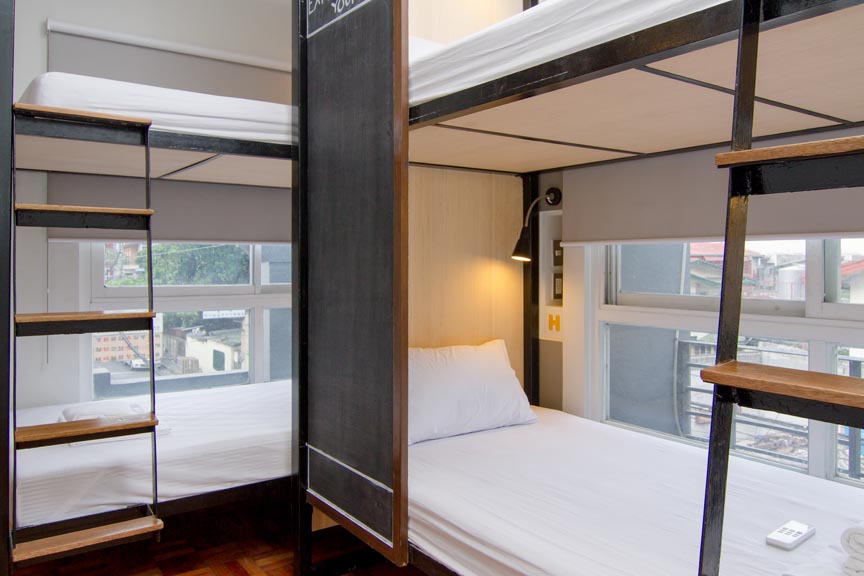
Rainy season = bed weather. What better way to cap all these activities than to cuddle up and warm yourself in a nice and comfortable hotel room! Catch your much-needed zzz’s in Z Hostel with their big customized beds, hotel quality linens, and ultra-soft pillows. Head to the roofdeck for some quiet time while gazing at the misty Makati skyline.

As much as the Philippines is a tropical, sunny paradise, it can also be a top destination pick during the rainy season. In case you get wet, might as well dance and have fun under the rain!

|| book now ||